



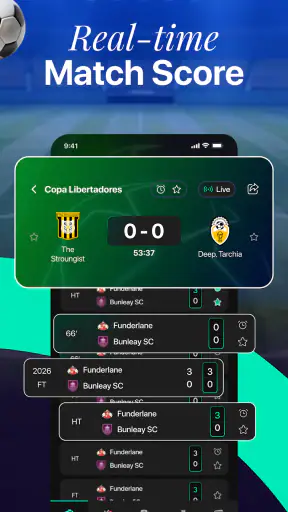

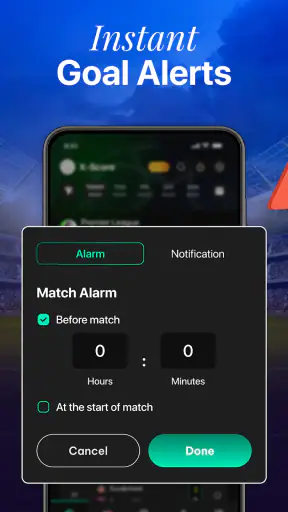
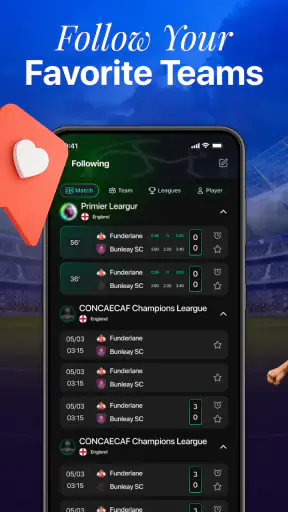

I use football score apps for one simple reason: I want the right match information quickly, without opening a crowded sports platform and digging through several menus. X-Score: Live Football Score takes that focused approach. It is a free sports app from Tools for Everyday - AI Tasks, built around live football scores, match statistics, fixtures, goal scorers, and highlights. After spending time with it, I see it as a practical choice for people who follow several competitions casually or need a quick way to check what is happening during a busy day.
The important question is not whether it includes every possible football feature. The better question is whether its particular mix of live information and match context suits the way you follow the sport. I found that it works best when I want a fast overview, a fixture reminder, or a quick look at how a match is developing. It is less convincing for someone who expects a complete club-management experience, deep editorial coverage, or a replacement for watching the match itself.
What I looked for before recommending it
My first decision criterion was speed of understanding. A score app should answer basic questions almost immediately: Who is playing? What is the current score? Has the match started? Who scored? What happens next? X-Score is aimed at that practical need rather than trying to turn every screen into a football magazine. That makes its appeal easy to understand, especially for users who check scores in short moments between work, commuting, or other tasks.
The second criterion was how much useful context sits behind the score. A bare result is enough for a quick glance, but it does not tell me whether a match is upcoming, already underway, or finished, and it cannot replace a view of the surrounding fixtures. The inclusion of statistics, schedules, scorers, and highlights gives the app more value than a simple scoreboard. I can move from a result to the details that explain why the match matters without changing to a completely different type of service.
I also considered whether the app makes sense for different kinds of football followers. Someone who follows one club may care most about fixtures and goal alerts. A fan of international competitions may need a broader daily overview. A person who watches betting lines or analyzes performances may care more about detailed numbers and historical information. X-Score appears most naturally suited to the first two groups, while the third may eventually want a more specialized football statistics platform.
There is also a practical compatibility point. The app requires Android version 8.0 or later, so it remains accessible to people using older but still common Android devices. It is rated for Everyone, which fits its straightforward sports-information purpose. The current version is 1.0.10, and that matters mainly because users should keep expectations realistic: this feels like a focused, developing tool rather than a mature all-in-one football ecosystem.
Its position in the store is encouraging without being a reason to install it blindly. X-Score has an average rating of 4.3 from around one and a half thousand ratings, with more than a million installs. I read those figures as evidence that the core idea works for a substantial audience, not as proof that every user will find the same experience perfect. Score apps depend heavily on personal habits, preferred competitions, and tolerance for missing depth.
The everyday situation where it makes the most sense
Imagine I am cooking dinner while a match I care about is taking place. I do not want to stream the game, turn on commentary, or spend several minutes searching through a general sports app. I open X-Score, check the current result, look at the scorer, and glance at the match statistics. If the game is not being played yet, I can use the fixture information to confirm the start time and return later. That is a small workflow, but it is exactly the kind of repeated use that makes a score app worthwhile.
Another realistic situation is a busy matchday with several games starting at different times. Instead of remembering every kickoff, I can use the fixtures view as a personal checklist. I might first scan the schedule, then open only the matches that interest me. This is more efficient than following each club separately, particularly when my attention is divided between family plans, work, or travel.
The app is also useful after a match has ended. I often remember a result but not who scored or how the game developed. Checking the scorer information and available highlights gives me a compact way to reconstruct the important moments. It does not provide the emotional experience of a full replay, but it helps me catch up without pretending that a summary is the same thing as live viewing.
Where X-Score wins over the usual alternatives
The clearest strength is focus. Many large sports apps combine football with basketball, tennis, news, video, fantasy tools, and social features. Those services can be excellent, but the extra material also creates friction. X-Score is easier to approach when my only goal is to follow football information. I do not need to navigate through unrelated sports before reaching the match list.
That focused design changes how I use the app during short checks. I can open it with a specific question in mind: Is the match underway? What was the latest score? Who found the net? Which fixtures are coming up? A general alternative may offer more overall content, but X-Score has a better chance of keeping the answer close to the surface. For casual supporters, that can matter more than a huge feature catalogue.
The combination of live scores and match context is another meaningful advantage. A score alone is too thin for regular use, while a full analysis service can be excessive for a quick check. X-Score sits between those extremes by bringing together results, statistics, fixtures, scorers, and highlights. The trade-off is that users should not assume every category has the same level of depth. The app’s value comes from the balance, not from being the deepest possible source for any single item.
I also like the way this combination supports a two-step habit. First, I can scan the broader fixture picture. Then I can open one match and inspect the information that makes it relevant. This is more useful than opening a match page first without knowing what else is happening. My practical tip is to use the fixture view as the starting point on matchdays and reserve the detailed match screen for games that genuinely deserve attention.
Goal-scorer information is especially helpful when I join a conversation late. Friends often mention a score without explaining how it happened, and the scorer list gives immediate context. It also helps when several matches are taking place at once and I want to identify the important events without reading a long article. This is a small feature, but it makes the app feel more informative than a simple live-result ticker.
Highlights add another useful layer, although I treat them as a shortcut rather than a full viewing solution. If I missed a decisive moment, a highlight can help me understand what happened. If I am seriously following a match, I would still choose a dedicated broadcast or video service where available. That distinction is important: X-Score helps me catch up, but it is not designed to replace live football coverage.
Three habits that make the app more useful
My first suggestion is to separate “checking” from “following.” For a quick check, I use the app’s score and scorer information and leave. For following, I begin with fixtures, identify the matches that matter, and then revisit their detailed pages. This prevents the common mistake of treating every match as equally important and makes the app feel less noisy.
My second suggestion is to use statistics as a question-answering tool rather than as decoration. When a result surprises me, I look at the available match numbers to add context. A scoreline can hide a one-sided game, a tight contest, or a match decided by a single moment. Statistics are most valuable when they change how I interpret the result, not when I simply collect figures.
My third suggestion is to use highlights selectively. Watching every available clip can take almost as much time as following the match itself. I get more value by checking highlights only for matches I missed or results that affect the teams I follow. That makes the app a useful catch-up tool instead of another stream of content competing for my attention.
A fourth practical insight is to compare the fixture list with my own calendar before making plans around a match. Schedules can change in real football, so I would not treat any score app as a substitute for an official club or competition announcement when timing is critical. X-Score is convenient for everyday planning, but important travel or viewing arrangements deserve a final confirmation elsewhere.
Where a different type of app may fit better
X-Score is not the right choice for every football fan. If I want long-form reporting, interviews, tactical articles, transfer coverage, or a strong editorial voice, I would choose a football news app or a trusted sports publication. A score-focused tool can tell me what happened, but it will not necessarily explain the wider story around the match.
It may also be a weaker fit for someone who watches one club obsessively and wants a club-specific experience. An official club app may provide team news, ticket information, announcements, and content built around that single team. X-Score makes more sense when I want to compare several matches or follow football beyond one club’s own schedule.
Users who need advanced historical analysis should also look carefully at their priorities. If I am building detailed performance comparisons, researching seasons, or studying players across many competitions, I may prefer a specialist statistics database. X-Score’s broad mix is convenient, but convenience and depth are not always the same thing. The more technical my questions become, the more likely a dedicated research tool will serve me better.
There is a similar distinction with video. Highlights are useful when I need a quick visual reminder, but anyone looking for full matches, extended replays, commentary, or a reliable streaming catalogue should choose a video-oriented service with the appropriate rights and coverage. I would install X-Score alongside that kind of service, not instead of it.
Finally, people who want a social football community may find the experience too individual. Some alternatives are built around discussion, fan reactions, predictions, fantasy competitions, or personalized feeds. Those features can be enjoyable, but they also change the purpose of the app. X-Score is better when I want information first and conversation second.
Free access, paid extras, and the cost of switching
The app is free to install, which makes trying it low-risk. There are in-app purchases ranging from $3.99 to $29.99 per item, so I would review any upgrade screen carefully before confirming a purchase. The sensible approach is to use the free experience long enough to decide whether the app fits my matchday routine. A score app only earns a place on my phone if I return to it naturally, not because I paid before understanding its value.
The cost of switching from another football app is mostly habit rather than money. I may already know where my favorite teams appear, where fixtures are shown, and how to reach match details. Moving to X-Score means learning a new layout and deciding whether its balance of scores, statistics, scorers, and highlights covers my regular needs. I would not switch during an important tournament without testing it first; familiar navigation has real value when matches are moving quickly.
My recommended trial method is simple. I would use the app across one ordinary week rather than judging it from a single match. I would check a scheduled fixture, follow a live game, inspect a finished result, and open a highlight. I would also test whether the competitions I personally care about are easy to find. This workflow reveals more than a five-minute installation because it tests the app in the situations that create repeat value.
There is another switching cost that is easy to overlook: information overlap. If I keep a large sports app, an official club app, a news service, and X-Score all sending similar information, my phone can become distracting. I would choose one primary score tool and keep the others only when they provide something genuinely different. X-Score has the strongest case as the primary app for a user who values a clean football overview rather than a complete sports media bundle.
Because the app is rated for Everyone and supports Android 8.0 or later, it is a reasonable option for sharing with less technical family members who simply want to follow results. I would still show them the basic route from fixtures to a match page, since the best experience comes from understanding how those pieces connect. Its broad accessibility is useful, but no score app can remove the need to learn where the information is placed.
My recommendation after using it
I recommend X-Score: Live Football Score to casual and regular football followers who want a dedicated place for live results, fixtures, scorers, statistics, and highlights. Its strongest quality is not one spectacular feature; it is the way those pieces support quick, repeatable matchday checks. I can use it when I have only a few seconds, then return when I want a little more context.
I would be more cautious if my main goal is deep analysis, club-specific news, full video coverage, or a social football community. In those cases, a specialist alternative is likely to be better, and X-Score should be considered a companion rather than a replacement. That is not a failure. A focused app can be valuable precisely because it does not try to become everything at once.
The developer, Tools for Everyday - AI Tasks, has positioned this as a practical sports utility, and that purpose comes through clearly. The app’s current version, 1.0.10, gives me the impression of a tool worth trying while keeping expectations grounded. I would pay attention to how comfortably it fits my preferred competitions and whether the available match detail is enough for my habits.
For me, the final decision is straightforward: if I want a fast football dashboard that helps me move from fixtures to scores and then to match context, I would install it. If I want a complete football media center, I would look elsewhere. X-Score is at its best when speed, focus, and useful match information matter more than an oversized feature list. That makes it an easy recommendation for everyday score checking, with the honest reminder that serious analysts and dedicated viewers may need a second, more specialized service.


